The problem: an impossible octagon
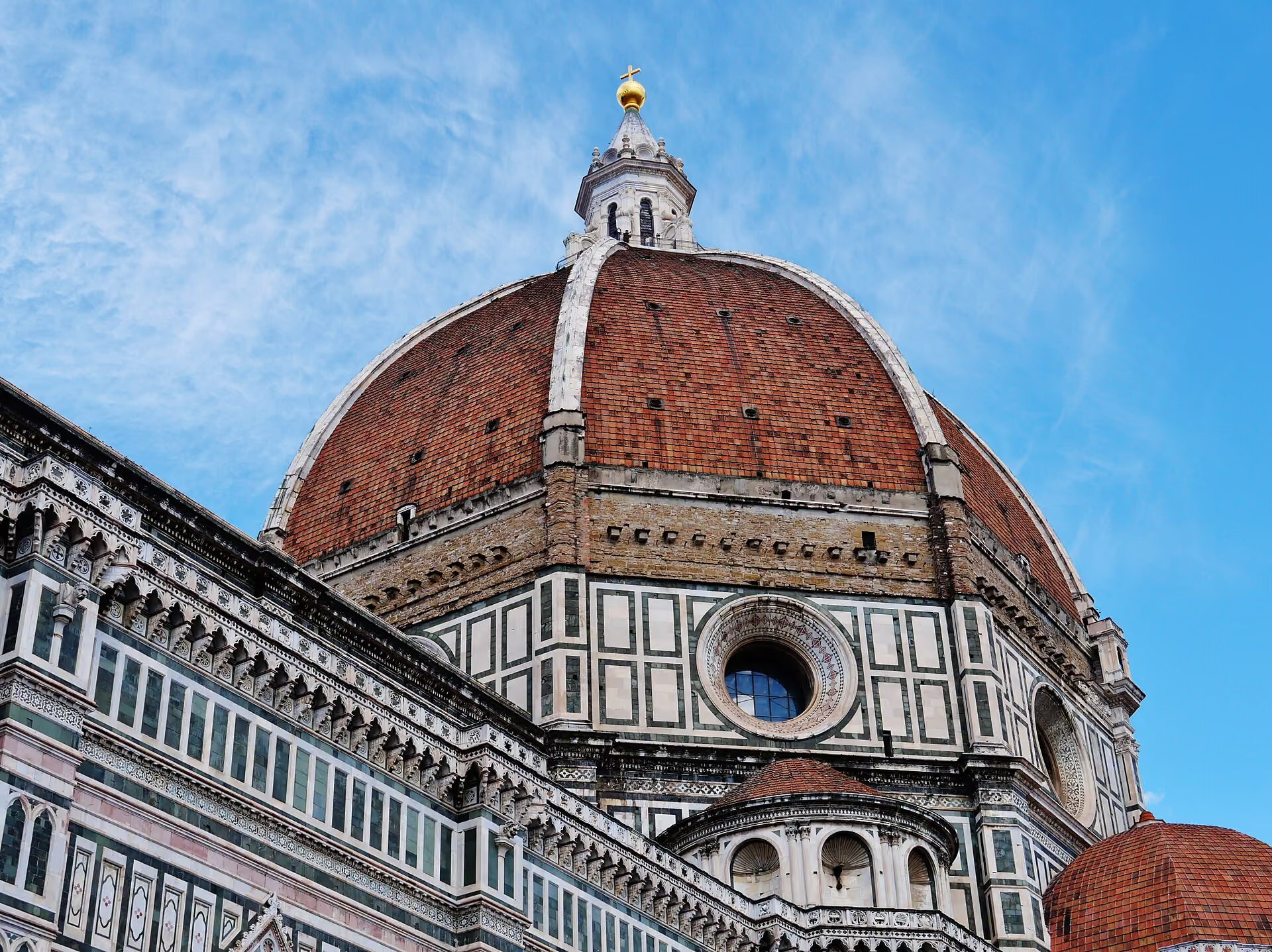
When Florence began its new cathedral in 1296, the design called for a dome wider than any vault built since the Pantheon. One detail: nobody knew how to build it. Domes were raised on centering — timber scaffolds that carry the masonry until the mortar sets. But roofing a 45-metre octagon starting 55 metres up would demand a forest: insane costs, timber that didn't exist, and no guarantee the trusses would hold.
For more than a century the cathedral stood open to the sky. Florentines lived with it while the Opera del Duomo saved money and waited for someone with an answer.
1418: the competition
The Opera announced a public competition. Enter Filippo Brunelleschi — goldsmith by training, still smarting from his 1401 loss to Ghiberti over the baptistery doors. He had spent the intervening years in Rome studying ancient ruins, the Pantheon above all, and returned with a proposal that sounded like charlatanry: build the dome without centering — "senza armadura alcuna".
The committee was sceptical; Vasari's legend tells of stormy meetings and an egg made to stand by cracking its tip. In 1420 the works began, with Brunelleschi as master builder and — history's little joke — Ghiberti as co-director, soon sidelined.
The four inventions holding the dome up
1. The double shell
Two shells, not one: the inner, over two metres thick at its base, carries the loads; the outer, thin, sheds the rain and gives the skyline its taut profile. Between them run theclimbing stairs — a masterpiece you visit from inside its own walls.
2. The herringbone bond
The bricks don't run in flat rings: at regular intervals, vertically-set bricks "stitch" each course to the one below, forming the signature herringbone (spina di pesce) pattern. Each ring, once closed, stands on its own — the dome built itself, ring by ring, with nothing underneath.
3. The pointed profile
Instead of the Pantheon's hemisphere, Brunelleschi chose a raised "quinto acuto" profile that channels thrust more vertically and reduces the dome's urge to spread. Chains of stone and timber hoop the structure like the rings of a barrel.
4. The construction machines
To lift tonnes of material 90 metres up, Brunelleschi invented new machines: the famousox-driven hoist with a reversing gear — the oxen always walked the same direction while a gear flipped the load's travel — and rotating cranes perched on the growing dome. The wooden models are in theOpera del Duomo Museum.
The essential timeline
| 1296 | First stone of the new cathedral, designed by Arnolfo di Cambio |
|---|---|
| 1418 | The Opera del Duomo's dome competition |
| 1420 | Works begin under Brunelleschi |
| 25 March 1436 | Cathedral consecrated by Pope Eugene IV; the dome is closed |
| 1446 | Brunelleschi dies, weeks after the lantern (his design) is begun |
| 1461 | The lantern is completed |
| 1466–1471 | Verrocchio's gilded ball crowns the lantern |
| 1572–1579 | Vasari and Zuccari fresco the Last Judgment |
The record in numbers
- ~45.5 metres internal diameter: no masonry vault has ever exceeded it.
- ~116 metres total height to the top of the lantern.
- ~4 million bricks, fired by selected kilns under obsessive quality control.
- 24 meridian ribs: 8 visible in white marble outside, 16 hidden in the masonry.
- 16 years of construction without a collapse — almost unheard of for the era.