A century of white dome
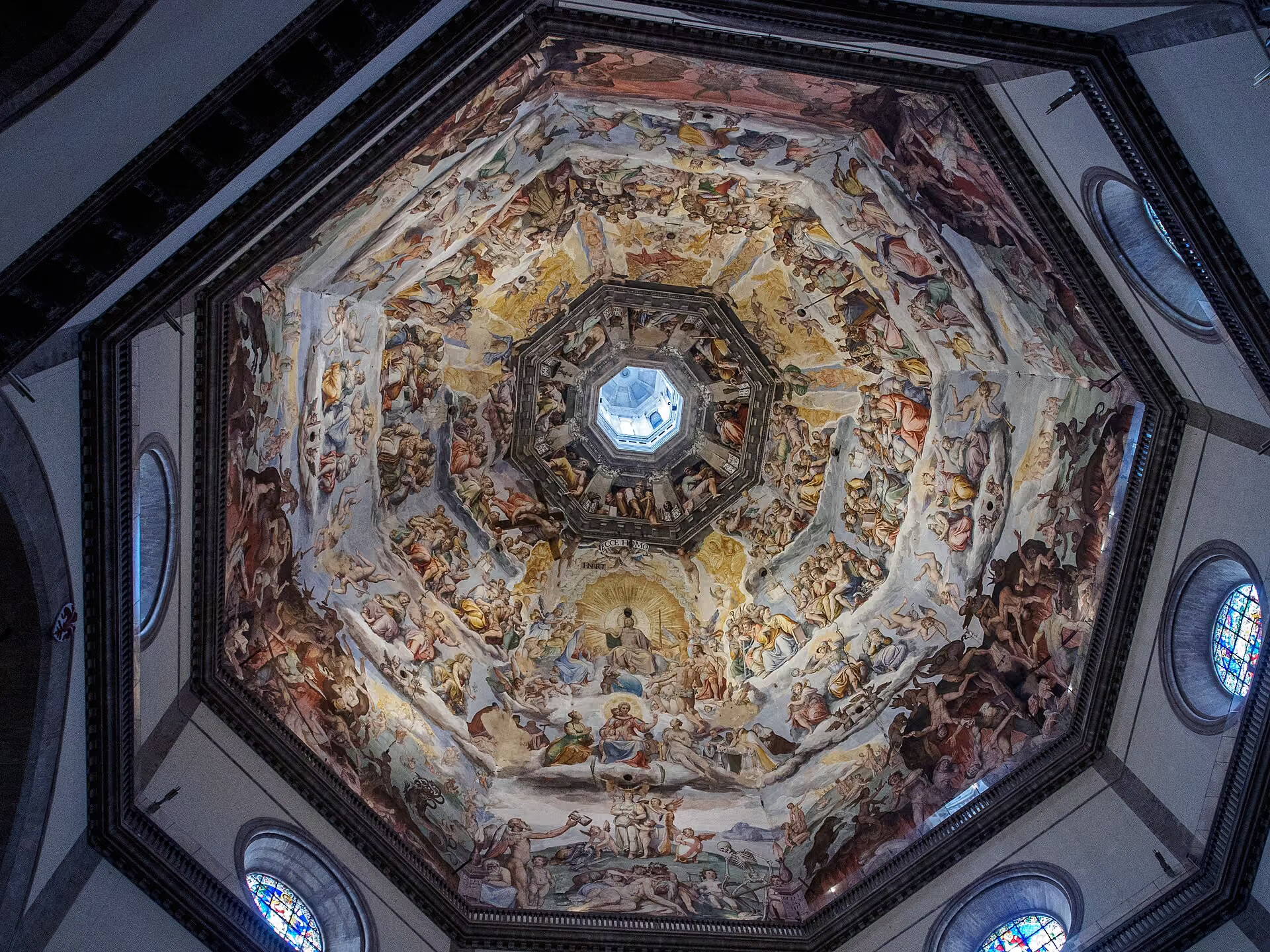
For over a hundred years after the 1436 consecration, the dome's interior stayed white-plastered. Brunelleschi had imagined golden mosaics like thebaptistery's; the cost buried the idea. It was Grand Duke Cosimo I de' Medici who settled on fresco, entrusting the task in 1572 to his court artist:Giorgio Vasari — the first art historian, court painter and director of the Medici image.
Vasari completed the topmost ring — the angelic choirs — and died in 1574. The baton passed to Federico Zuccari, who finished in 1579 after switching technique: much of his work is a secco, on dry plaster — quicker, less eternal. From the balcony the difference reads with the naked eye: two hands, two eras of taste, one painted heaven.
How to read the Judgment
The cycle is organised in concentric registers, top to bottom:
- The choirs of angels around the lantern ring — Vasari's part.
- Saints, the elect and the Elders of the Apocalypse, turned in adoration toward the east axis, where Christ in Judgment presides between Mary and Florence's saints.
- The Virtues, Beatitudes and gifts of the Spirit — personifications crowding the middle band.
- Hell, at the bottom: demons, the damned and the capital sins punished one by one — the register everyone photographs from the balcony, with a taste for the grotesque that owes much to Dante.
Where to see them (and what to expect)
| Viewpoint | Cost | What you see |
|---|---|---|
| Cathedral nave | Free | The whole from ~90 metres: composition yes, details no |
| Interior balcony (the climb) | Brunelleschi Pass €35 / fast track €58 | The lower registers — hell included — a few metres away |
| Guided tour | €74 | Same, plus the scene-by-scene iconography |
The rest of the interior, while you're there
The nave — free to enter — deserves a focused walk:
- Paolo Uccello's clock (1443) on the inner façade: 24 "Italian hours", hand running counterclockwise.
- The equestrian monuments of Sir John Hawkwood (Uccello, 1436) and Niccolò da Tolentino (Castagno, 1456): fake statues, real painting.
- Dante and the Divine Comedy by Domenico di Michelino (1465), the poet holding his book between hell and 15th-century Florence.
- The 16th-century marble floor — geometry that looks like a carpet from the balcony.