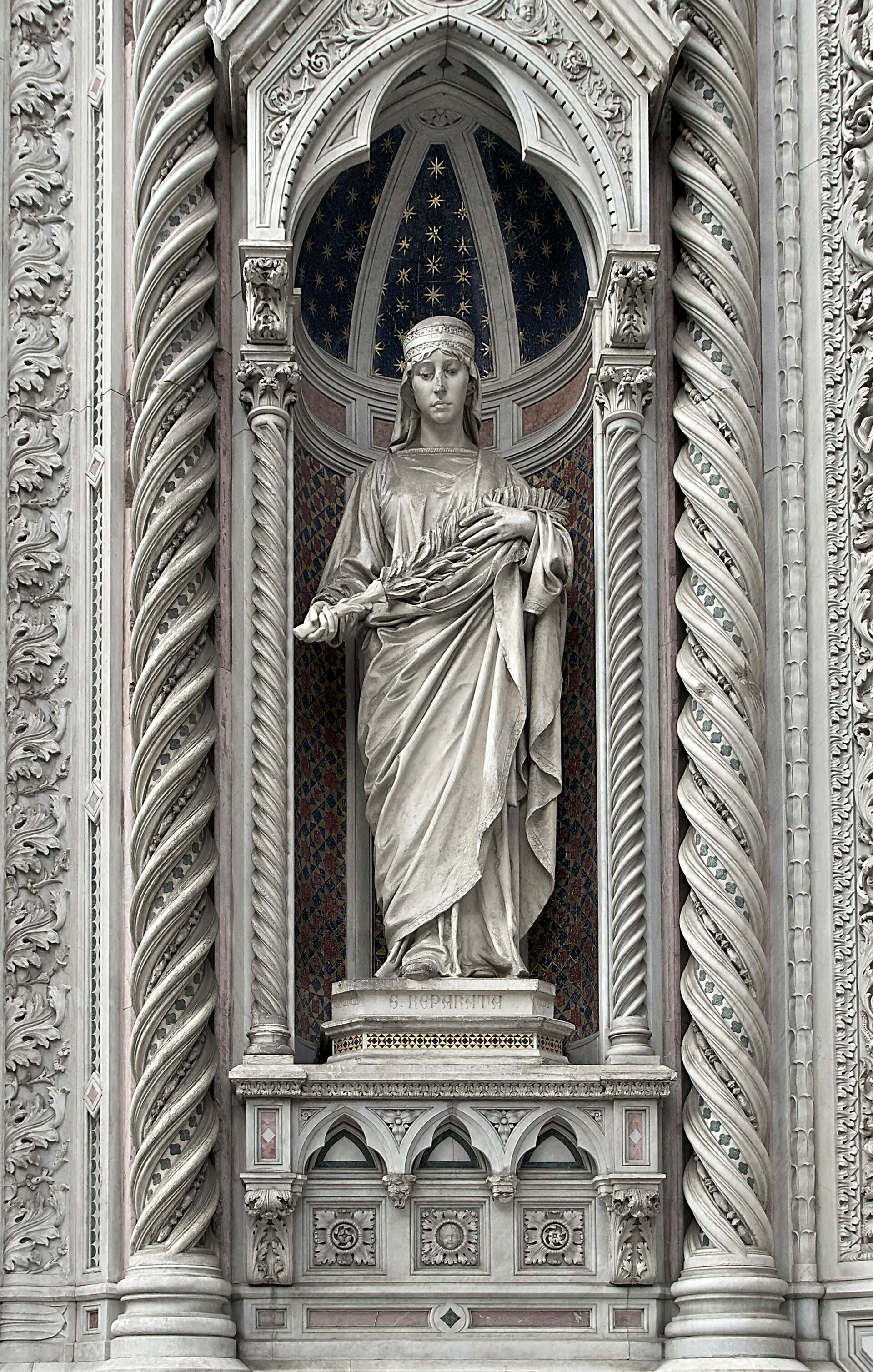
The cathedral before the cathedral
Before Florence dreamed of record-breaking domes, its cathedral wasSanta Reparata: a basilica founded between the 4th and 5th centuries, when the city was a declining Roman town and Christianity was taking its first public steps. For nearly a thousand years — rebuildings included — it was the religious heart of the city: bishops were installed here, peaces sworn, notables buried.
When work on Santa Maria del Fiore began in 1296, the old church wasn't demolished at once: the new cathedral grew literally around it, and Santa Reparata kept functioning inside the building site for decades. It was razed only in 1375. Its remains, forgotten, resurfaced with the excavations of 1966–1974.
What you see on the route
- The early Christian floor mosaic, naming the donors who financed the basilica: 5th-century crowdfunding, written into the pavement.
- Overlapping masonry from at least four building phases — Roman, early Christian, Carolingian and Romanesque: a history book in cross-section.
- Medieval tombs, including slabs of Florentine bishops and notables.
- Filippo Brunelleschi's tomb: a sober slab, rediscovered in 1972. The man of the dome rests beneath his own work — an honour Florence granted no other artist.
- Excavation finds: ceramics, coins and sculptural fragments in cases along the route.
The right moment: the crypt stays the quietest place in the complex even in mid-August. When the Duomo crowds wear you down, these 15 minutes underground are the perfect reset — cool in summer, too.
Who was Santa Reparata?
Reparata was a young Christian martyr of the 3rd century, venerated as Florence's patron in the city's first Christian centuries. Tradition links her to the victory over the barbarians in 406 — hence the basilica's dedication. In time the patronage passed to St. John the Baptist — of baptistery fame — but the first cathedral's name stayed carved in memory, and now in the archaeological route.
Practical information
| Access | Staircase in the cathedral's right nave |
|---|---|
| Hours | Follows cathedral hours (10:15 am–3:45 pm, Sundays closed to tourists) |
| Tickets | Included in all three complex passes |
| Duration | 15–20 minutes |
| Accessibility | One flight of historic stairs leads down |