Brunelleschi's DomeTickets, tours & guides for Florence's Dome

The monumental complex

Florence Cathedral: how the Santa Maria del Fiore complex works

Six monuments, three passes, hours that never match and a free nave: the Duomo confuses even seasoned travellers. This guide puts it in order and tells you where to start.

  • Free nave entry
  • Passes valid 3 days
  • 6 monuments, one ticket
  • UNESCO World Heritage
Please note:This is an independent guide and information website. It is not the official website of the Florence Duomo and we are not affiliated with the Opera di Santa Maria del Fiore. Tickets are sold through authorised partners such as Tiqets. For official channels, visit duomo.firenze.it.

Most booked tickets & tours

The Duomo is not one monument — it's six

"Visiting the Florence Duomo" actually means a complex of six separate places, each with its own entrance, its own hours and — except the cathedral itself — its own ticket:

The good news: you don't need six tickets. The three official passescover different combinations and stay valid for 3 days from first use.

The golden rules of the complex

Facts checked against the official site duomo.firenze.it, August 2026.
CathedralFree, queue at the façade, 10:15 am–3:45 pm, closed to tourists on Sundays
DomeBrunelleschi Pass only (€35) with a pre-booked time slot
Bell towerBrunelleschi or Giotto Pass, no timed slot needed
Baptistery, crypt, museumIncluded in all three passes
Dress codeShoulders and knees covered in all places of worship

A little history, without the dust

The cathedral was begun in 1296 to replace little Santa Reparata: Florence, rich on banking and wool, wanted the largest cathedral in Christendom. Arnolfo di Cambio drew a colossal nave — with one hole in the plan, literally: nobody knew how to roof the 45-metre octagon at the crossing.

The hole stayed open for over a century, until in 1418 the Opera del Duomo announced the competition that Filippo Brunelleschi won with an idea considered madness: build the dome without wooden centering. In 1436 the cathedral was consecrated, and the dome has defined Florence's skyline ever since.

The last piece was the façade: Arnolfo's original was dismantled in the 16th century and the front stayed bare brick until 1887, when Emilio De Fabris completed today's neo-Gothic façade in white, green and pink marble — the same palette as the 14th-century bell tower.
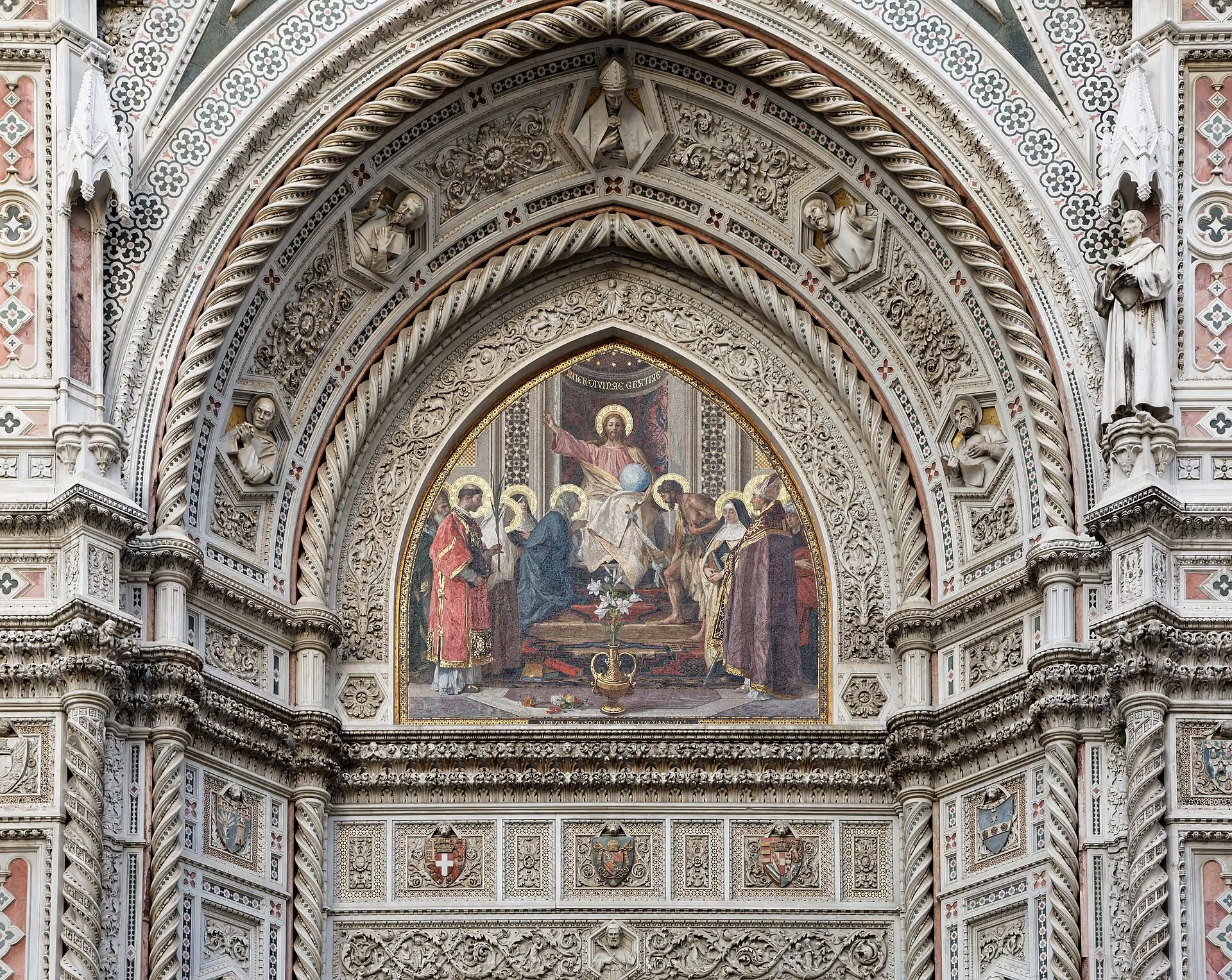
The neo-Gothic façade of Florence Cathedral in white, green and pink marble
The façade of Santa Maria del Fiore: only completed in 1887, in polychrome marble matching the medieval bell tower.

Inside the cathedral: what to look for (since it's free)

The nave surprises by contrast: inlaid marble outside, sober walls and enormous volumes inside — most artworks were moved to the museum. What remains still justifies the queue:

  • The Last Judgment by Vasari and Zuccari inside the dome — 3,600 m² of frescoes seen from 90 metres below.
  • Paolo Uccello's clock (1443) on the inner façade: it keeps "Italian hours" and runs counterclockwise.
  • The equestrian monuments by Uccello and Andrea del Castagno — frescoes imitating bronze statues.
  • The painting of Dante and the Divine Comedy by Domenico di Michelino (1465).
  • Access to the Santa Reparata crypt with Brunelleschi's tomb.

The free-entry queue can top an hour in summer — timings and workarounds are in thefree entry guide.

The visiting strategy that works

With a 3-day pass, this order minimises queues and sore legs:

  • Day 1, early morning: dome at 8:15 am (booked slot), then the baptistery before the tour groups.
  • Day 1, afternoon: cathedral after 2 pm, when the queue shrinks.
  • Day 2: bell tower in the morning, museum in the afternoon (the least crowded monument).
  • Crypt: attach it to the cathedral visit — access is from the nave.

Only one day? Skip the bell tower (the dome view covers it) and checkeach monument's hours before stacking visits.

Florence Cathedral in numbers

Cathedral length153 metres — among Europe's largest churches
Height with the dome~116 metres to the top of the lantern
Dome internal diameter~45.5 metres, a world record in masonry
Construction1296–1436 (cathedral), 1420–1436 (dome)
Consecration25 March 1436, Pope Eugene IV

Frequently asked questions

How much does it cost to enter the Florence Duomo?

The cathedral nave is free. The other monuments require a pass: Ghiberti Pass from €15 (baptistery, crypt, museum), Giotto Pass from €20 (adds the bell tower), Brunelleschi Pass from €35 (adds the dome). Official prices — verify at duomo.firenze.it.

Are the Duomo and Santa Maria del Fiore the same thing?

"Duomo" is the popular name of Florence Cathedral, dedicated to Santa Maria del Fiore. In everyday use, "Duomo" often means the whole complex: cathedral, dome, bell tower, baptistery, crypt and museum.

How long do I need for the whole complex?

A full day if you chain everything together. With a pass — valid for 3 days from first use — you can spread the monuments over several days, which is far more comfortable.

Is the Duomo open on Sundays?

The cathedral is closed to tourists on Sundays (open for worship only). The dome (from 12:45 pm), bell tower, baptistery and museum remain open to visitors.

Do I need to book the cathedral in advance?

No — for the nave you simply join the queue at the façade entrance. A timed reservation is mandatory only for the dome climb.

What architectural style is the Florence Duomo?

The cathedral is Gothic (begun in 1296 to a design by Arnolfo di Cambio), the dome is the first masterpiece of the Renaissance, and the current façade is neo-Gothic, completed in 1887 by Emilio De Fabris.

Which monument of the complex is the best?

Depends what you're after: the dome climb is the most memorable experience, the baptistery has the golden mosaics, the museum keeps the originals by Ghiberti, Donatello and Michelangelo. The Brunelleschi Pass covers them all.

Facts checked against the official site duomo.firenze.it — duomo.firenze.it